
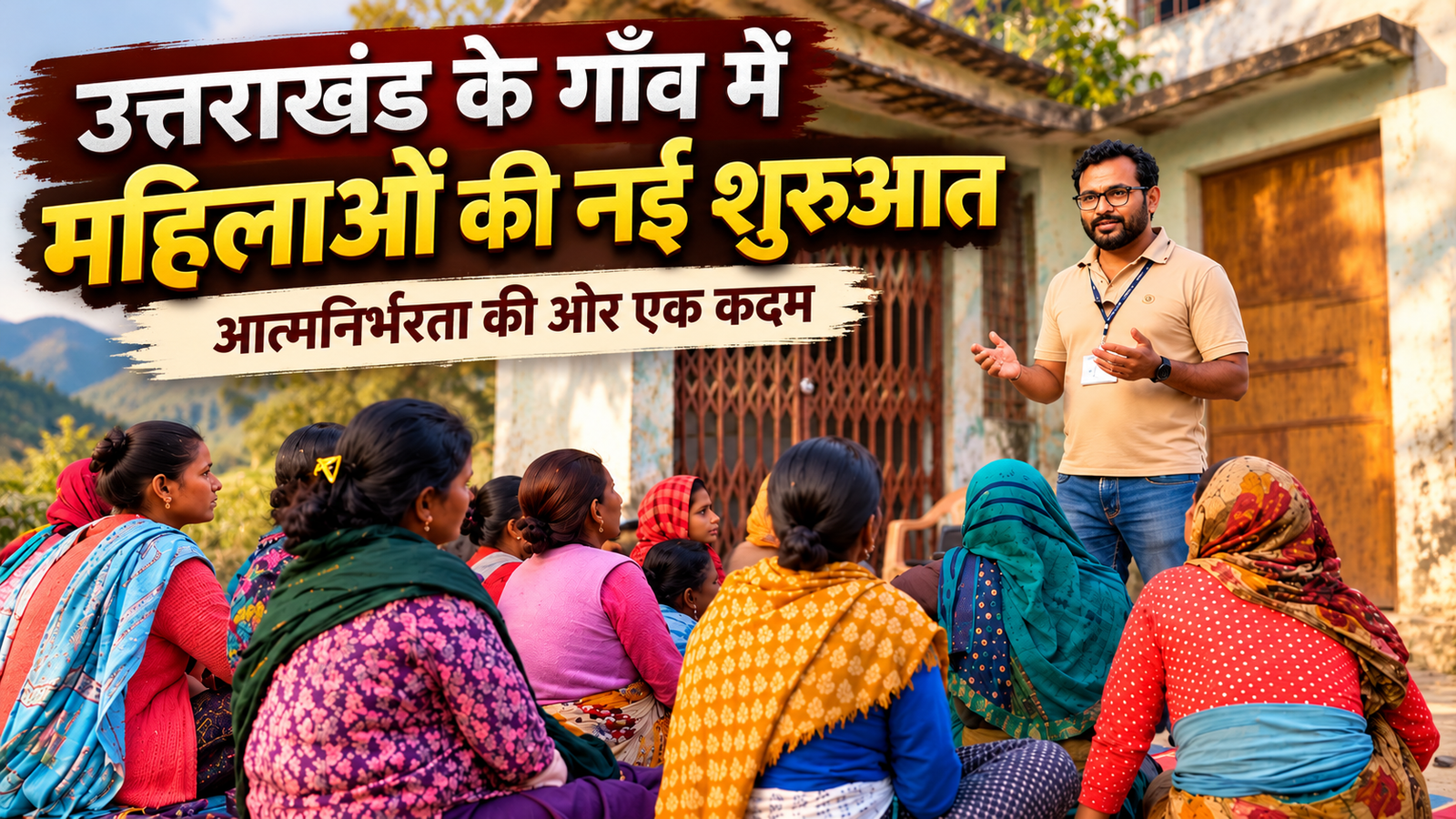
Empowering Women in Kathud Village, Uttarakhand
Building pathways to self-reliance through community participation, a Self-Help Group, and a proposed small-scale manufacturing enterprise.
Recognizing the Potential of Rural Women
Women are at the heart of rural communities. Their work, knowledge, and commitment contribute to family life and the development of their villages. Yet access to vocational training, local employment, and markets can be limited in some rural areas.
Creating new livelihood opportunities begins by listening to local people, understanding their needs, and exploring practical solutions together. Sustainable progress takes planning, community participation, and access to the right resources.
With this approach in mind, AdiSamarth Foundation met with women in Kathud village, in Uttarakhand’s Pauri Garhwal district. The initiative focused on bringing women together through a Self-Help Group and exploring the possibility of a small enterprise that could offer a pathway towards greater economic participation and self-reliance.
Why a Self-Help Group Matters
A Self-Help Group, commonly known as an SHG, brings people together around shared needs and goals. It can provide a platform for exchanging ideas, discussing challenges, developing skills, and exploring small business opportunities.
Working collectively can also help women participate in decisions, identify common priorities, and build a shared understanding of what may be possible for their community.
Collective Participation
Create opportunities for women to share ideas, discuss common goals, and participate in decisions.
Skills and Learning
Explore practical training in production, quality, workplace safety, and basic business operations.
Local Opportunities
Assess small enterprise ideas that suit local resources, skills, and potential market demand.
Greater Self-Reliance
Work towards livelihood opportunities that can develop through preparation, participation, and responsible management.
Exploring a Paper Plate and Paper Cup Enterprise
One idea being explored through this initiative is a small-scale enterprise producing paper plates and paper cups. The aim is to assess whether this activity could offer a practical livelihood opportunity for women in the village.
Turning an idea into a viable enterprise requires careful preparation. Machinery, raw materials, electricity, production costs, product quality, packaging, and access to buyers all need to be considered before operations can begin.
A realistic plan should also consider the local market, operating expenses, available skills, and the resources needed to maintain production over time. These factors will help determine whether the proposed enterprise is feasible.
Machinery and Setup
Identify suitable equipment based on the proposed scale, budget, and operating requirements.
Practical Skills
Explore training in machine operation, safe working practices, quality control, and basic maintenance.
Raw Materials
Assess suppliers, material availability, storage requirements, and recurring costs.
Connecting with Buyers
Explore local businesses, shops, and potential buyers to understand demand, pricing, and distribution.
Building Opportunities That Begin Locally
Livelihood opportunities can have value beyond income alone. Learning new skills, participating in group decisions, and gaining experience with enterprise activities may help women strengthen their confidence and contribute to community development.
- Practical experience: Opportunities to learn about production, quality, planning, and business operations.
- Collective problem-solving: A shared platform to discuss needs, responsibilities, and possible solutions.
- Local enterprise: Exploring whether a small production activity can meet a genuine market need.
- Long-term planning: Considering costs, training, sales, and ongoing management before moving forward.
Progress takes time. It depends on community participation, access to resources, practical preparation, and the ability to respond to challenges.
A Glimpse of Our Work in Kathud Village
Watch our video to learn more about our interaction with women in Kathud village and the idea of exploring livelihood opportunities through collective effort.
AdiSamarth Foundation’s interaction with women in Kathud village, Uttarakhand.
Turning an Idea into a Practical Opportunity
Moving from an idea to a functioning enterprise requires resources, coordination, and careful assessment. Depending on the final plan, the initiative may need support in areas such as:
- Assessing suitable machinery and essential equipment.
- Identifying suppliers and arranging initial raw materials.
- Connecting participants with relevant practical training.
- Preparing an appropriate and safe working space.
- Understanding packaging, storage, and product quality requirements.
- Exploring potential customers and local distribution options.
- Tracking costs, resources, and project progress responsibly.
The exact needs and budget should be established through project planning. Support can then be directed towards verified requirements and practical next steps.
Your Support Can Help Create New Possibilities
Community initiatives move forward when people contribute their time, skills, knowledge, and resources. Your support can help AdiSamarth Foundation work towards practical opportunities for women in Kathud village.
You can support our wider community work through donations, volunteering, sharing relevant expertise, or connecting the initiative with potential training and market partners.
For information about the initiative’s current needs, please contact the Foundation before directing funds towards a specific requirement.
Working with Communities for Meaningful Change
AdiSamarth Foundation supports community-focused initiatives and encourages practical action around local needs. We believe responsible development begins by listening to people, understanding their circumstances, and exploring solutions together.
The Kathud village initiative reflects this approach: bringing women together, considering a possible livelihood enterprise, and identifying the resources and preparation needed to move forward.
Learn more about our campaigns, community activities, and transparency information.
Frequently Asked Questions
Where is the Kathud village initiative located?
The initiative is based in Kathud village, in the Pauri Garhwal district of Uttarakhand, India.
What is the purpose of the Self-Help Group?
The aim is to bring women together to discuss shared goals, explore practical skills, and consider livelihood opportunities through collective participation.
What is the proposed paper plate and paper cup enterprise?
It is an idea being explored as a possible small-scale livelihood activity. Its feasibility depends on equipment, training, material costs, operating arrangements, and market demand.
Has production started?
This article describes the initiative and the proposed enterprise. It does not claim that production has started. Contact AdiSamarth Foundation for the latest project status.
How can I support the initiative?
Visit our donation page or Get Involved page to explore ways to support the Foundation’s work.